Key Takeaways
- Large wall clocks are very much still in style — statement wall clocks are getting bigger and bolder in 2026 as interior design moves away from overly polished interiors and embraces character.
- A 30-inch wall clock is the most versatile oversized format, substantial enough to anchor a standard living room wall without requiring the ceiling height or square footage that 36-48″ pieces demand.
- The main styles in 30-inch clocks are farmhouse metal, open-frame minimalist, industrial gear/steampunk, natural wood, Roman numeral traditional, and mid-century sunburst — each suited to different room aesthetics.
- The overarching shift in 2026 wall clock trends favors oversized statement pieces, mid-century influences reinterpreted for modern sensibilities, mixed materials, and functional art that serves practical purposes.
- Silent non-ticking movement is a baseline requirement at this size — a 30-inch clock is prominent enough that ticking becomes audible across most rooms during quiet moments.
Are Large Wall Clocks Still in Style?
Absolutely. In fact, statement wall clocks are only getting bigger and bolder in 2026. Interior design is moving away from overly polished interiors and embracing character, which makes a large wall clock the perfect focal point. Oversized timepieces often break free from the traditional circular dial, featuring asymmetrical shapes, sunburst motifs, exposed skeletonized gear trains, or vibrant, high-gloss primary color-blocking — functioning as practical wall art.
The bigger shift is how clocks are being used. They’ve graduated from “functional item that also looks acceptable” to intentional decor choices that replace paintings, mirrors, and gallery walls as the primary focal element on a living room wall. A well-chosen 30-inch clock in the right style does more for a room than five smaller items competing for the same space.
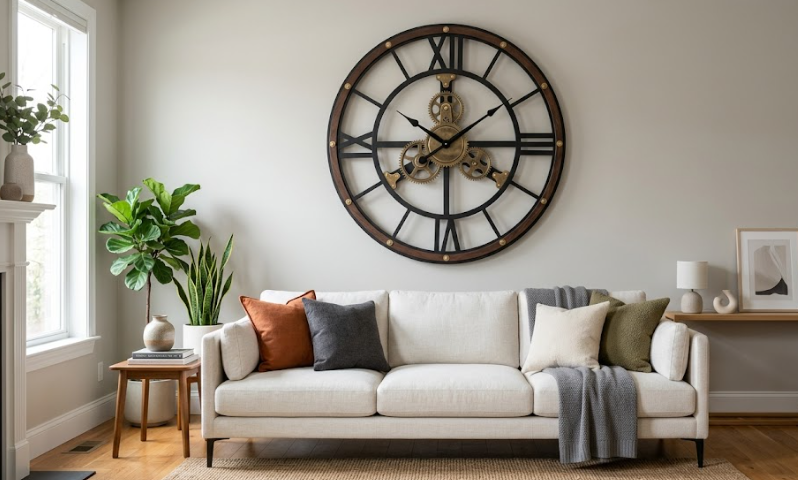
Which Wall Clock Is Good for a Home?
The right clock for a home depends on three practical filters before style becomes the conversation: movement type, material durability, and size-to-room proportionality.
Movement type: A silent sweep (non-ticking) mechanism should be the baseline for any room where quiet matters — living rooms, bedrooms, offices, and nurseries all benefit from this. Smart silent-movement technology has become an increasingly desirable feature, with noise-free mechanisms a plus to comfort especially in bedrooms and study rooms.
Material durability: Powder-coated metal and solid wood hold up significantly better over years of display than painted plastic or thin MDF with a metallic-look finish. The material distinction matters more than it initially seems because clocks stay on walls for years, not months.
Size proportionality: A wall clock should cover 30–40% of the wall width for the perfect visual proportion. A 30-inch clock on a wall under 75 inches wide will feel crowded; the same clock centered on a 90–120 inch wall reads as perfectly scaled.
For most homes, a 30-inch clock in a durable material with a silent sweep movement and a finish that coordinates with existing room metals is the formula that satisfies all three filters regardless of style direction.
What Are the Different Styles of Large 30-Inch Wall Clocks?
Farmhouse Metal with Roman Numerals
The highest-volume selling style in the 30-inch format — typically a black or aged-bronze powder-coated metal frame, a clean face with Roman numeral hour markers, and metal hands. Works in farmhouse, transitional, industrial, and country-style interiors. One of the most versatile style choices since it reads as both rustic and modern depending on the surrounding decor.
Minimalist Open-Frame Metal Ring
A thin metal ring with minimal or no hour markers, slim hands, and a completely open or lightly marked face that lets the wall color show through the clock’s center. The visual lightness of the open frame means a 30-inch piece reads less heavily than a fully solid-faced clock of the same diameter — a strong choice for modern, Scandinavian, and contemporary interiors where the clock should be present without dominating.
Industrial Gear and Steampunk
Exposed gear mechanisms, bold Roman or Arabic numerals, and finishes in antique bronze, gunmetal, or weathered brass. Industrial inspired wall clocks with bold numerals, metal cases, and high contrast dials continue to trend, particularly in kitchens and open-plan living spaces. These function explicitly as mechanical wall art — the movement mechanism itself is part of the decorative interest.
Natural Wood
Solid or reclaimed wood faces in walnut, oak, pine, or mixed wood-and-metal constructions. Sustainable wood options like FSC-certified walnut and oak showcase natural grains and organic shapes that promote biophilic design principles, with metal-wood hybrids softening urban environments. Natural wood clocks suit warm, organic interiors — mid-century, Japandi, rustic, and transitional styles all accommodate wood clocks naturally.
Mid-Century Sunburst and Starburst
Radiating spoke designs in mixed metal, walnut-tipped brass, or full gold finishes — a directly referential 1950s-60s form that has seen significant revival in 2026’s broader mid-century modern resurgence. Mid-century influences reinterpreted for modern sensibilities are explicitly a 2026 trend, and the sunburst clock is one of the clearest expressions of this aesthetic.
Skeletonized and Exposed-Movement Sculptural Clocks
Oversized clocks featuring exposed skeletonized gear trains function as statement pieces that demand prominent, uncrowded walls — treated as standalone gallery installations rather than accessories. At 30 inches, a skeleton clock has enough presence to anchor a wall without the mounting complexity of larger sculptural pieces.
What Are the Latest Trends in Large Wall Clock Design for 2026?
The 2026 wall clock landscape celebrates the beautiful intersection of form and function, with clocks evolving from utilitarian objects to sculptural elements that reflect personal taste and design philosophy.
Monochromatic Minimalism
The philosophy of “less is more” continues to reign supreme in 2026, but minimalism has evolved from stark emptiness to warm, intentional restraint, with a massive surge in monochromatic colorways and highly refined silhouettes. Single-color clocks in matte black, warm white, or deep charcoal are designed to read as quiet architectural elements rather than decorative statements.
Metallic Finishes Across the Spectrum
Metallic finishes remain one of the strongest interior trends for 2026, with brushed gold, antique bronze, matte silver, and textured black designs continuing to dominate luxury decor collections. Gold in particular has shifted from “bold choice” to mainstream acceptability in the interiors market.
Sustainable and Biophilic Materials
The surge in eco-friendly wall clock materials reflects growing environmental consciousness, with sustainable wood options showcasing natural grains and organic shapes that promote biophilic design principles.
Sculptural Non-Circular Forms
The trend in 2026 focuses on larger wall clocks with different shapes, including irregular shapes, sunburst, and open-face designs, moving away from the assumption that a clock must be a circle.
Industrial-Luxe Fusion
The industrial-luxe trend combines raw, masculine materials with sophisticated finishes to create wall clocks that feel like mechanical art, often featuring exposed moving gears, brushed metal finishes in gold, copper, or gunmetal, and robust frameworks that evoke a sense of history and craftsmanship.
What Are the Trending Wall Clocks for 2026?
Several specific design directions are producing the most-discussed and most-purchased pieces in 2026:
Oversized Minimalist Black Metal
The 30-inch matte black metal frame with a clean face, thin hands, and minimal or no numerals is the design direction with the most consistent performance across living room and dining room buyers. Minimalist modern wall clock designs featuring clean lines, slim metal frames, and neutral colours continue dominating contemporary interiors.
Warm-Tone Wood and Metal Hybrid
A combination of natural walnut or oak with black or brass metal accents addresses the demand for warmth and organic texture without abandoning the structured, graphic quality that makes oversized clocks work as focal points. Nothing beats the timeless warmth of genuine wood craftsmanship, with premium designs blending furniture-grade wood with precision quartz movements.
Gold and Brass Statement Pieces
Gold-toned clock frames have completed a full cycle from dated to retro to intentionally nostalgic to genuinely contemporary — the right finish context (matte rather than polished, paired with warm neutrals rather than bright whites) makes gold a current rather than dated choice.
Exposed Gear Industrial Art Clocks
Moving gear mechanisms that are visible from the front rather than hidden behind a face — functioning as wall sculptures that happen to tell time. These require display in rooms where they have space to be fully visible and appreciated rather than partially obscured by surrounding furniture.
How to Match a 30-Inch Clock to Your Home’s Style
Rather than shopping by clock style first, starting from the room’s existing style produces more cohesive results:
Modern or contemporary → Minimalist open-frame ring or monochromatic matte black face with no numerals.
Farmhouse or transitional → Black metal frame with Roman numerals, or natural wood with Arabic numbers and a metal ring border.
Industrial or loft → Exposed gear or steampunk design in bronze, gunmetal, or dark metal finishes.
Scandinavian or Japandi → Natural wood face, minimal markers, warm neutral tones, clean proportions.
Mid-century modern → Sunburst or starburst form in gold or walnut-tipped brass.
Eclectic or maximalist → Sculptural non-circular forms, mixed materials, high contrast finishes used as intentional statement art.
Common Mistakes When Choosing a 30-Inch Wall Clock Style
- Choosing a style in isolation without considering the room’s existing finishes — a gold sunburst clock in a room with all chrome hardware creates visual tension that’s difficult to resolve without changing one or the other.
- Buying an industrial-style clock for a room without industrial design elements — exposed gears and raw metal finishes need the right surrounding aesthetic to read as intentional rather than mismatched.
- Choosing a fully solid face when an open-frame would serve the space better — in smaller rooms, an open-frame clock at 30 inches reads lighter and less dominant than a solid face of the same diameter.
- Skipping silent sweep movement because the style listing didn’t mention it — if it doesn’t say “silent” or “non-ticking,” assume it ticks; this is worth verifying for any living room clock at this scale.
- Defaulting to the most popular style rather than the most appropriate one — farmhouse Roman numeral clocks sell well because they’re versatile, not because they’re the right choice for every interior.
Wrapping Up
A 30-inch wall clock is the format where the “functional item” and “genuine decor statement” categories fully overlap — large enough to anchor a room wall and drive a design narrative, scaled correctly for most standard living rooms without needing grand architectural space. The right style for your home is the one that coordinates with what’s already there, not the one that’s most popular across the market.
Frequently Asked Questions
Are large wall clocks still in style?
Yes — statement wall clocks are getting bigger and bolder in 2026, with interior design actively moving toward character-driven focal points over polished, understated interiors. Sizes over 24 inches are rising fast, particularly in open-plan living spaces.
Which wall clock is good for a home?
A silent sweep movement, durable material (powder-coated metal or solid wood), and a size that covers 30–40% of the wall width below it are the three baseline requirements. Style should coordinate with the room’s existing metals and material tones.
What are the different styles of large wall clocks?
The main styles in the 30-inch format are farmhouse metal with Roman numerals, minimalist open-frame metal rings, industrial gear and steampunk designs, natural wood, mid-century sunburst and starburst forms, and skeletonized exposed-movement sculptural pieces.
What are the latest trends in large wall clock design?
The dominant 2026 trends are monochromatic minimalism, metallic finishes across warm and cool tones, sustainable biophilic wood materials, sculptural non-circular forms, and the industrial-luxe fusion of raw materials with sophisticated finishing.
What are the trending wall clocks for 2026?
Oversized minimalist matte black metal frames, warm-tone wood and metal hybrids, matte gold and brass statement pieces, and exposed gear industrial art clocks are the specific design directions generating the most interest in 2026.
