Key Takeaways
- Wall clocks have evolved from practical timekeeping into statement decor pieces — in 2026, they’re frequently used where a painting or mirror would previously have gone.
- The dominant 2026 trends are oversized statement pieces, minimalist clean-line designs, industrial-luxe metal finishes, sustainable materials, and skeletonized or exposed-gear sculptural forms.
- For most living rooms, a clock positioned at eye level (57–60 inches from the floor) above the primary sofa or console, with 6–9 inches of breathing room on each side, produces the most balanced result.
- Feng shui traditionally places wall clocks in living rooms, kitchens, offices, and entrances — and recommends avoiding bedrooms and bathrooms, where clocks are associated with negative energy in this belief system.
- Silent sweep movement is now a must-have standard for living room clocks — the comfort difference between a sweep and a step movement becomes pronounced during quiet evenings.
What Has Changed About Modern Wall Clocks in 2026?
Wall clocks have transformed from mere timekeeping devices into statement pieces that define living spaces, with the latest trends showcasing a beautiful fusion of functionality and artistry. The practical shift is visible in how people shop for them: buyers are now searching for clocks the way they’d search for art — by style, material, and visual impact rather than just size and mechanism.
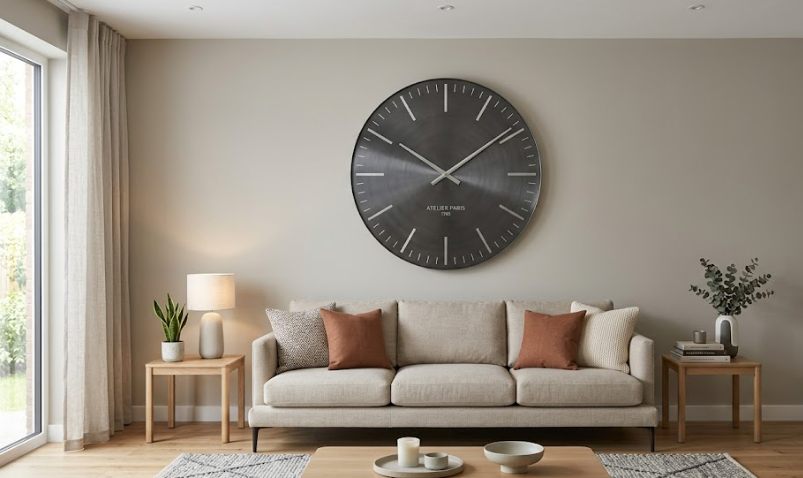
Statement wall clocks are only getting bigger and bolder in 2026, as interior design moves away from overly polished interiors and embraces character, which makes a large wall clock the perfect focal point. The result is clocks being used where a framed canvas, gallery wall, or oversized mirror might previously have gone — a practical and functional choice over a purely decorative one.
Are Large Wall Clocks Still in Style?
Yes — emphatically. The overarching shift in 2026 wall clock trends favors oversized statement pieces that command attention, mid-century influences reinterpreted for modern sensibilities, mixed materials creating texture and visual interest, and functional art that serves practical purposes.
The trend isn’t just toward larger sizes but toward using clocks more intentionally as design anchors. Sizes over 24 inches are rising fast, filling blank spots on tall walls in open living spaces — a direct response to the growing proportion of open-plan homes where a single large piece provides visual structure that multiple smaller ones can’t.
What Are the Latest Trends in Large Wall Clock Design?
Minimalist and Monochromatic Designs
The philosophy of “less is more” continues to reign supreme in 2026, but minimalism has evolved from stark emptiness to warm, intentional restraint, with a massive surge in monochromatic colorways and highly refined silhouettes. Clean-line clocks in single tones — matte black, warm white, natural oak — suit Scandinavian and contemporary interiors without competing with other decor.
Industrial-Luxe Metal Finishes
Industrial-inspired wall clocks with bold numerals, metal cases, and high-contrast dials continue to trend, particularly in kitchens and open-plan living spaces. The industrial-luxe trend combines raw, masculine materials with sophisticated finishes to create wall clocks that feel like mechanical art, often featuring exposed moving gears, brushed metal finishes in gold, copper, or gunmetal, and robust frameworks that evoke a sense of history and craftsmanship.
Skeletonized and Sculptural Forms
Oversized timepieces often break free from the traditional circular dial, featuring asymmetrical shapes, sunburst motifs, exposed skeletonized gear trains, or vibrant, high-gloss primary color-blocking. These sculptural clocks function explicitly as wall art that happens to tell time, rather than a timepiece that happens to look attractive.
Sustainable Wood and Mixed Materials
Sustainable wood options like FSC-certified walnut and oak showcase natural grains and organic shapes that promote biophilic design principles, with metal-wood hybrids softening urban environments while reducing environmental impact.
Smart Integration
Modern digital wall clock innovations have successfully bridged the gap between technology and aesthetics, with Wi-Fi synced time displays and integrated weather or temperature features appearing in clock designs that maintain the visual priority of decor rather than looking like dashboard monitors.
Which Wall Clock Is Best for a Living Room?
The answer depends on the room’s existing style and wall scale, but a few practical filters apply across most living rooms:
Match the clock’s finish to existing metal accents. A room with gold light fixtures and hardware looks most cohesive with a warm-metal clock; a room with brushed nickel or chrome suits cooler metal finishes.
Scale to the wall and furniture below. The clock should not exceed the width of the sofa, table, or mantel below it, and 6–9 inches of space around the piece keeps it as a clean focal point rather than a crowded element.
Prioritize silent sweep movement for living room use. Smart silent-movement technology has become an increasingly desirable feature, with noise-free mechanisms a plus to comfort especially in living rooms and bedrooms where ticking becomes noticeable during quiet moments.
Style guidance by room aesthetic:
- Modern minimalist: Clean dial, slim hands, matte black or white finish, 18–30″
- Industrial or loft: Exposed gears, brushed metal, bold numerals, 24–36″
- Scandinavian: Natural wood, minimal hour markers, warm tones, 18–24″
- Traditional or transitional: Roman numerals, warm metal finish, ornate frame, 24–36″
- Grand or open-plan: Sculptural oversized piece, any material, 36–48″+
How to Style a Wall with a Large Clock
Use it as the primary focal point, not one element among many.
A statement clock demands a prominent, uncrowded wall — treating the clock as a standalone gallery installation rather than a mere accessory produces more impact than surrounding it with competing frames, shelves, or artwork.
Hang at the correct height.
For standard rooms, hang the center of the clock at eye level, typically 57 to 60 inches from the floor, ensuring there is enough breathing room around the frame so the design doesn’t compete with nearby furniture or architectural features.
Pair with simple, restrained furniture below.
A large clock above a console table, sideboard, or sofa reads most clearly when the furniture below doesn’t fight for attention. One or two simple objects — a vase, a plant, a single framed piece — complement rather than crowd.
Use furniture to visually anchor the clock.
A large clock floating above an empty wall without furniture below can look arbitrary. Positioning it above a sofa, console, or fireplace gives it a visual anchor and connects it to the rest of the room’s composition.
Consider asymmetric placement in gallery-wall contexts.
If the clock shares a wall with other artwork, treat it as the largest anchor piece in a gallery arrangement — offset slightly to one side rather than perfectly centered, balanced by smaller pieces on the adjacent wall area.
Where Is the Lucky Place to Put a Wall Clock?
In feng shui tradition, clock placement is associated with energy flow and has specific recommendations — though this is a cultural belief system rather than an established scientific framework.
Recommended placements in feng shui:
- Living room — considered the best room for a wall clock, where it’s believed to attract positive energy and good fortune for the household.
- Kitchen — considered beneficial for family harmony and abundance.
- Home office or study — clocks are associated with productivity and forward momentum in these spaces.
- Entrance or foyer — a clock near the entrance is considered welcoming and auspicious in many feng shui frameworks.
Placements traditionally avoided:
- Bedroom — clocks in bedrooms are associated with time pressure and restlessness in feng shui tradition, and are generally discouraged.
- Bathroom — considered inauspicious, as the clock’s energy is believed to drain away with water.
- Directly above doors — traditionally avoided as it’s thought to place time pressure on those entering and leaving.
Directional guidance:
North-facing placement is traditionally associated with career and life path in feng shui; south is associated with fame and reputation. East placements are linked to family and health. These directional associations vary between different feng shui schools, so treat specific directional advice as a starting point rather than a strict rule.
How to Choose a Modern Wall Clock for Home Decor: Step-by-Step
- Start with your wall, not the clock. Measure the available space and identify the furniture or architectural feature the clock will relate to — this determines size before style.
- Choose a movement type before a style. Silent sweep for living rooms, bedrooms, and offices; step movement is acceptable only where background noise already masks the tick.
- Match material to existing room finishes. Clock finish to light fixture and hardware metals, frame material to existing wood tones and textures.
- Buy one size up from your first instinct. The most common wall clock regret is choosing too small — what looked substantial in a product photo often disappears against a full living room wall.
- Use painter’s tape on the wall to preview size before purchasing. Marking the clock’s diameter on the actual wall before buying is the most reliable way to confirm a size feels right in context.
Common Mistakes When Decorating With Modern Wall Clocks
- Choosing a ticking movement for a living room or bedroom — the sound that barely registers during the day becomes prominent in quiet evening or sleeping contexts.
- Hanging too high — a clock mounted well above eye level feels disconnected from the furniture below it and reads as an afterthought rather than an intentional focal point.
- Overcrowding the surrounding wall — a large clock competing with multiple frames, mirrors, and shelves loses its impact; give it breathing room to function as the statement it’s meant to be.
- Ignoring the room’s existing metal finishes — a rose gold clock in a room with chrome hardware and silver light fixtures creates visual tension that’s hard to articulate but easy to feel.
- Treating the clock purely as decor and ignoring legibility — a beautiful clock with hands that disappear into a complex dial or numerals that are hard to read at a glance defeats its practical purpose.
Wrapping Up
Modern wall clocks have earned a genuine place in home decor beyond their timekeeping function — and in 2026, the most compelling ones treat the clock as functional art, scaled to the wall and styled to the room rather than chosen as an afterthought. Getting the size, finish, movement type, and placement right in sequence produces a result that feels intentional rather than decorative for decoration’s sake.
Frequently Asked Questions
Which wall clock is best for a living room?
The best living room wall clock has a silent sweep movement, a size roughly two-thirds the width of the primary furniture below it, and a finish that matches the room’s existing metal and material tones. Style should match the room’s aesthetic — minimalist, industrial, traditional, or sculptural depending on what’s already there.
Are large wall clocks still in style?
Yes — statement wall clocks are getting bigger and bolder in 2026, increasingly used as room focal points in place of paintings or gallery walls, with sizes over 24 inches rising fast particularly in open-plan living spaces.
What are the latest trends in large wall clock design?
The dominant 2026 trends are minimalist monochromatic designs, industrial-luxe metal finishes with exposed gears, skeletonized and sculptural non-circular forms, sustainable natural wood and mixed materials, and smart integrated displays — all favoring oversized statement pieces that function as practical wall art.
How do you style a wall with a large clock?
Treat it as the primary focal point on an uncrowded wall, hang the center at 57–60 inches from the floor, leave 6–9 inches of breathing room on all sides, and anchor it visually with furniture below rather than letting it float on a bare wall.
Where is the lucky place to put a wall clock?
In feng shui tradition, the living room, kitchen, home office, and entrance are considered auspicious placements, while bedrooms and bathrooms are traditionally avoided. These are cultural and spiritual beliefs rather than scientifically established principles.
